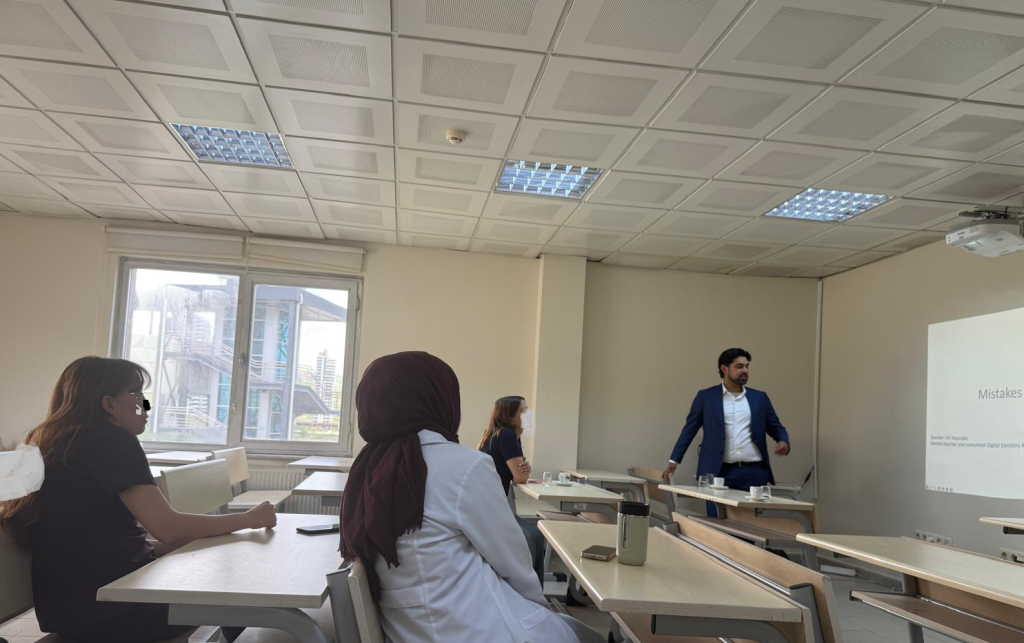
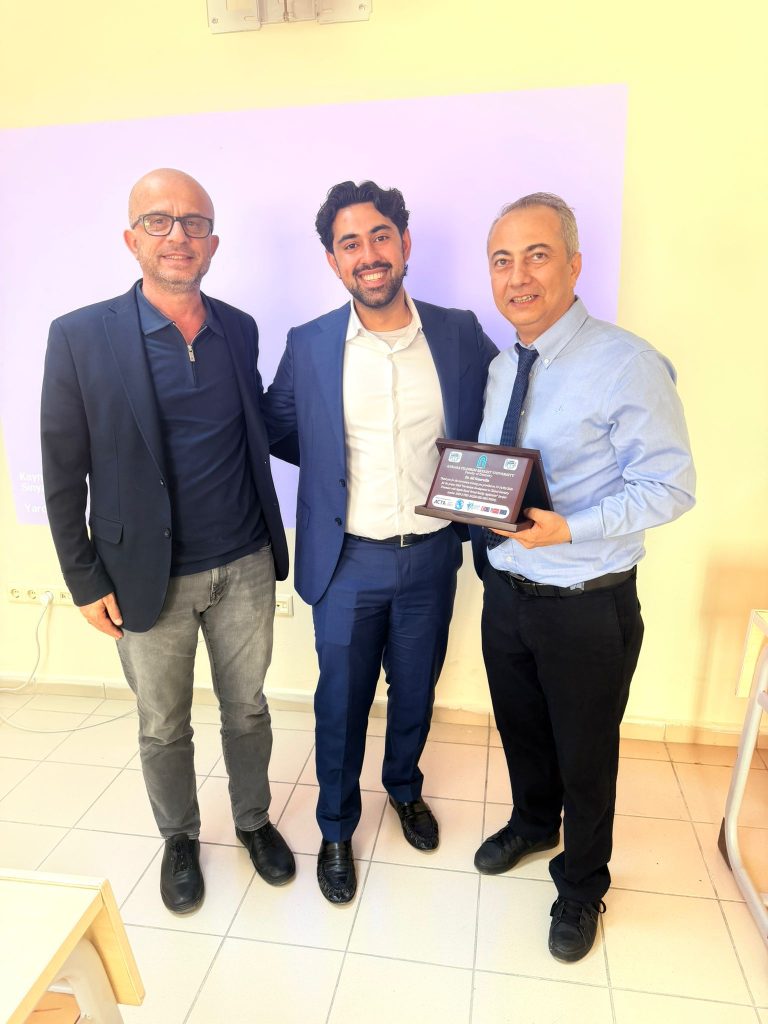
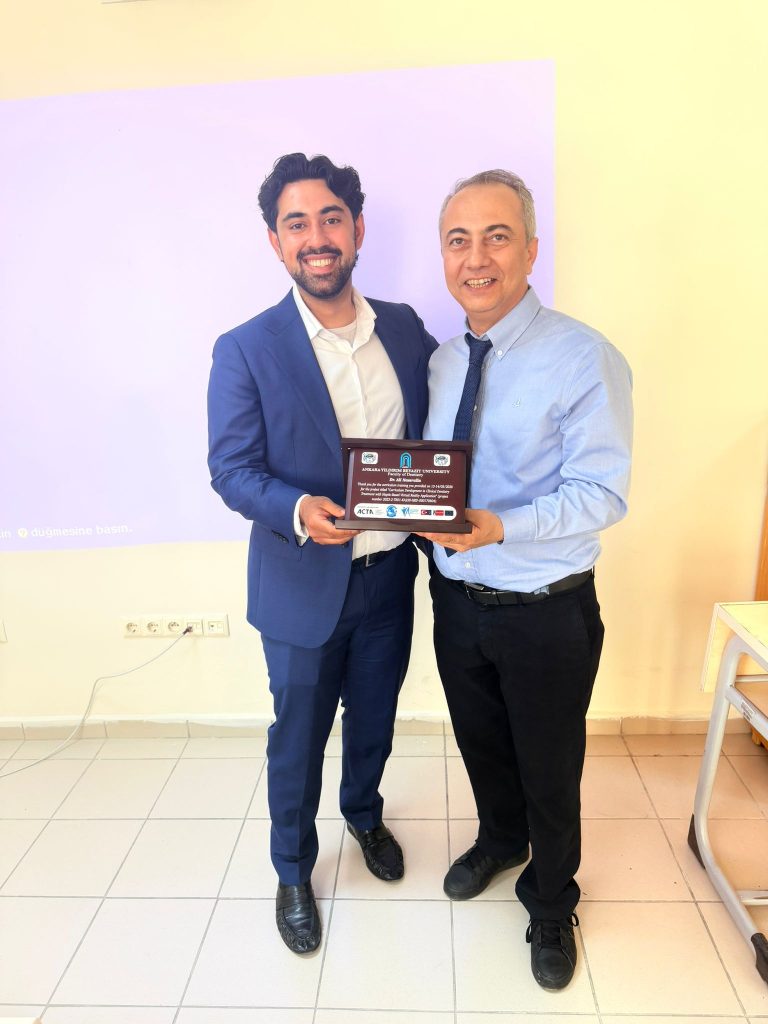
Following the Summer School and hands-on digital dentistry training held on 13-14 May 2026, the CDHVR Project Closing Meeting was held on 15 May 2026 at Ankara Yıldırım Beyazıt University Faculty of Dentistry Hospital, Ovacık Campus. During the meeting, the final curriculum was reviewed and confirmed, and decisions were taken on dissemination, sustainability, follow-up, and future use of project results.
CDHVR Project Closing Meeting Held at AYBU Ovacık Campus
Following the Summer School and hands-on digital dentistry training held on 13-14 May 2026, the CDHVR Project Closing Meeting was held on 15 May 2026 at Ankara Yıldırım Beyazıt University Faculty of Dentistry Hospital, Ovacık Campus, Ankara.
The meeting was organised within the scope of the Erasmus+ KA220-HED project titled “Curriculum Development in Clinical Dentistry Treatment with Haptic-Based Virtual Reality Application”. The activity was coordinated by Assoc. Prof. Mahmut Sertaç Özdoğan, CDHVR Project Coordinator, with the participation of project partners and academic representatives.
The Closing Meeting focused on the final review of the project outputs, including the research report, curriculum framework, training materials, impact-assessment process, dissemination activities, and sustainability planning. Partners reviewed the overall implementation process and discussed how the outputs produced during the project could be maintained and used after the end of the project period.
One of the main outcomes of the meeting was the finalisation of the CDHVR curriculum. The project partners reviewed the final curriculum structure, learning outcomes, implementation logic, training materials, and the relationship between the curriculum and haptic/VR-supported practical training. As a result of these discussions, the final curriculum was confirmed as one of the main outputs of the project.
The meeting also focused on dissemination and sustainability. Partners reviewed the dissemination activities already carried out, including project website updates, academic presentations, congress contributions, and partner-level communication. In addition, future dissemination steps were discussed and planned, including the continued use of the project website, sharing of curriculum-related outputs, academic visibility, and possible use of the project results in future educational and research activities.
Sustainability and follow-up decisions were also taken during the meeting. The consortium agreed that the final curriculum, training materials, research findings, and impact-assessment approach should remain available as reference outputs after the end of the project. Partners also discussed how these outputs could be adapted in their own institutions and used as a basis for future cooperation, further dissemination, and possible new project development.
The Closing Meeting also included a final VR session and demonstration linked to the curriculum and dissemination outputs. This session helped connect the project’s theoretical curriculum-development work with practical haptic and digital dentistry training.
At the end of the meeting, partners discussed final reporting responsibilities, confirmed follow-up actions, and completed the formal closure of the project activities. The meeting represented an important final milestone for CDHVR by bringing together curriculum development, digital education, dissemination, sustainability, and partner cooperation in a single closing activity.
Through this final meeting, the CDHVR Project strengthened its contribution to innovative, practice-oriented, and digitally supported dental education. The project outputs are expected to support future educational activities, academic dissemination, and wider adoption of VR and haptic-supported approaches in dental training.