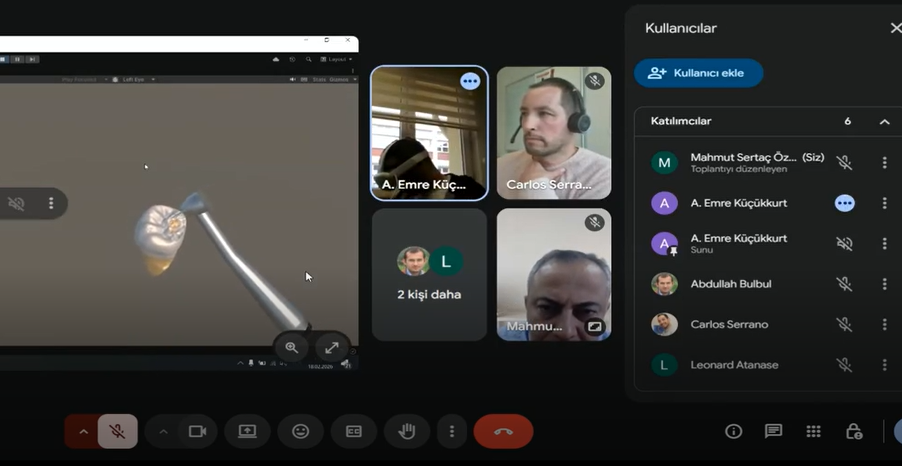
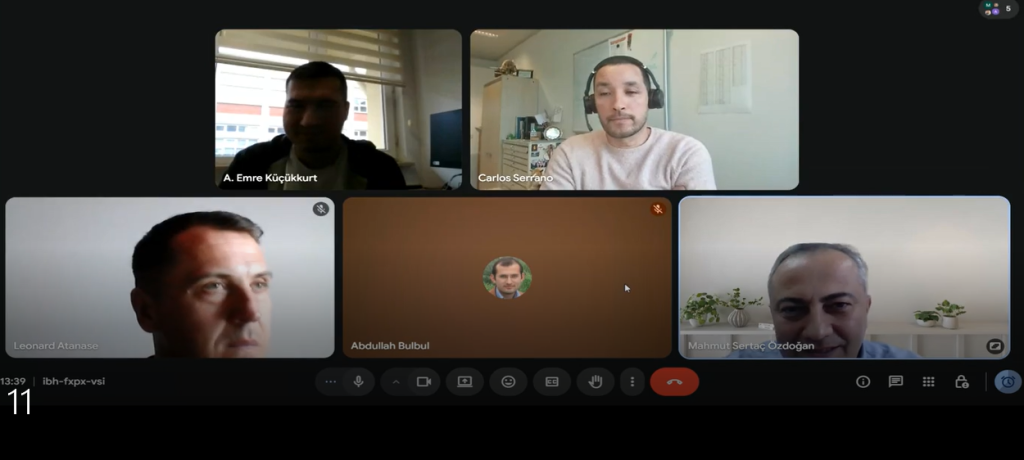
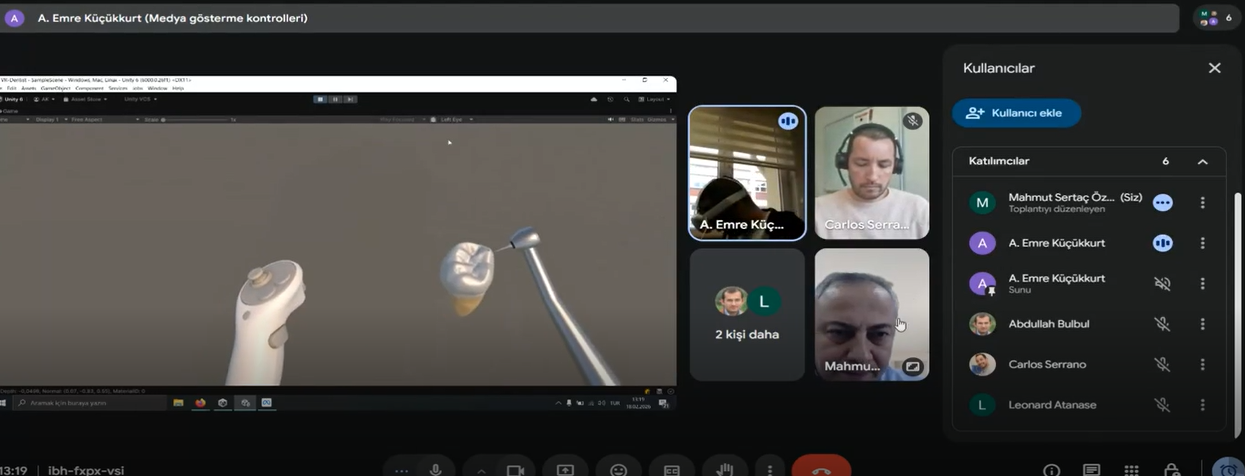
During the meeting, partners reviewed three central topics that will shape the next phase of work.
First, we carried out a focused manuscript draft review of our study titled “Attitudes toward Haptic-enabled VR in Dental Education: A Cross-sectional Survey of Perceived Effectiveness, Priority Use-Cases, and Implementation Barriers.” Partners discussed the clarity of the narrative, the strength of the results presentation, and the consistency of terminology across sections. The consortium agreed on the importance of ensuring that the manuscript clearly communicates both the educational value and the implementation challenges of haptic VR, with explicit emphasis on priority use cases and real world barriers that institutions face when adopting immersive simulation technologies.
Today, CDHVR partners held a highly productive online coordination meeting focused on strengthening our shared progress in curriculum development, dissemination planning, and platform readiness. Building on the strong collaboration across the consortium, the meeting confirmed our upcoming key activity: the Impact Assessment Report activity, which will be held on 18 February at 14:00 (Amsterdam time), online. The session is designed to align partners on the structure, content, and practical delivery of training materials that support haptic enabled VR integration in dental education.
Second, we discussed upcoming dissemination activities and confirmed a congress online session scheduled for Friday, 13 March. This will be an important opportunity to share early outputs, communicate the project vision to a broader audience, and gather external feedback. Partners also highlighted how dissemination should remain tightly connected to tangible project outputs, particularly the curriculum package, training materials, and software supported learning pathways.
Third, the meeting addressed software testing and the next steps for validating the platform components that will support delivery and tracking of learning activities. Partners reflected on current testing needs, including usability and workflow checks, and the importance of aligning the software environment with curriculum logic. This discussion will feed directly into upcoming activities, ensuring that training materials and digital delivery remain coherent, scalable, and ready for pilot implementation.
To support collaborative progress, the project team has shared key documents via Google Docs. The manuscript draft and the curriculum development and implementation document are now available for partner review and contribution. Partners are kindly invited to provide comments and suggested edits by the end of April, so that we can consolidate revisions efficiently and proceed with planned outputs and deadlines.
The consortium also confirmed the next coordination point: an online meeting on 19 February at 14:00 (Amsterdam time), using the same meeting link as today. Looking further ahead, partners noted that the next onsite consortium meeting will take place on May 2026, providing an important milestone for in person alignment, progress review, and planning for pilots and sustainability steps.
We thank all partners for their active engagement and constructive input. The shared commitment demonstrated in today’s meeting reflects the strength of the CDHVR consortium, and it supports our joint aim of delivering high quality, practical, and evidence informed training solutions for VR based dentistry education.